
Email marketing is one of the most effective ways for businesses to stay connected with customers, nurture leads, and encourage repeat purchases. But as a contact database grows, managing campaigns, customer information, follow-ups, and automation can quickly become complicated. This is where an integrated platform such as Brevo can make the process more organized.
Brevo combines email marketing with CRM, automation, segmentation, and other communication tools in one platform. Its CRM provides a central place to manage contacts, while email campaigns allow businesses to communicate with specific audiences. Automations can then handle repetitive interactions based on triggers, rules, and customer activity.
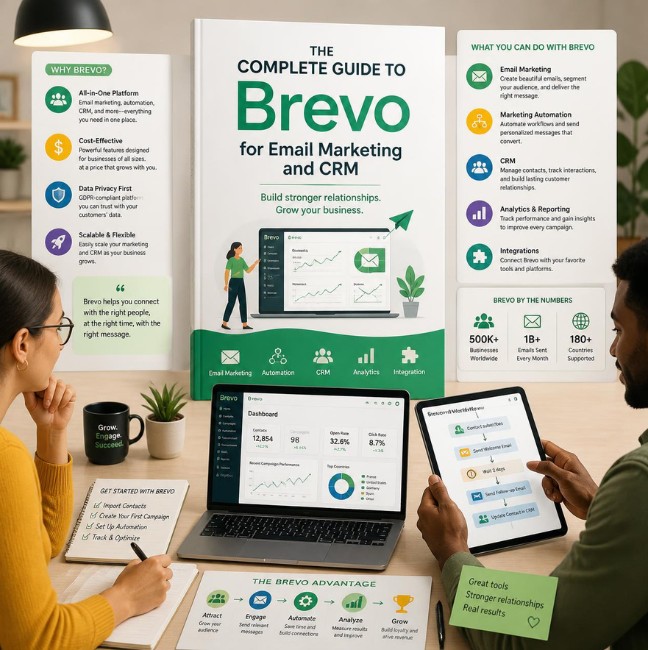
Whether you’re running an online store, managing a growing service business, building a newsletter, or nurturing sales leads, understanding how these features work together can help you create a more consistent customer communication strategy.
What Is Brevo and How Does It Work:
Brevo is an all-in-one marketing and CRM platform designed to help businesses manage customer relationships and communicate through channels such as email, SMS, chat, and more. Instead of relying on separate systems for contacts, email campaigns, and automated communication, businesses can bring many of these activities together within one platform.
The CRM acts as the foundation. Contacts can be imported manually, through CSV files, or through integrations, while information such as names, phone numbers, preferences, and other attributes can be stored for future campaigns. This information can then be used to create targeted segments and personalize communications.
The platform is particularly useful when email marketing needs to go beyond sending the same newsletter to everyone. Businesses can create different audiences based on customer characteristics, engagement, purchasing activity, or other available data.
Why Use Brevo for Email Marketing:
Email marketing works best when messages are relevant to the people receiving them. Sending identical content to an entire database may be easy, but it doesn’t necessarily address the different interests or needs of your customers.
Brevo provides tools for creating campaigns, choosing recipients, designing emails, personalizing content, and analyzing performance. Its drag-and-drop editor allows users to create professional-looking emails without requiring coding knowledge, while templates can make recurring campaigns easier to produce.
Businesses can use email campaigns for several purposes, including:
- Newsletters and company updates
- Product announcements
- Promotional campaigns
- Educational content
- Customer re-engagement
- Event invitations
- Seasonal marketing
- Product recommendations
- Lead nurturing
The key is to match the message with the audience instead of treating every subscriber the same way.
Understanding Brevo CRM:
Centralized Contact Management:
A strong CRM begins with organized customer data. Brevo allows businesses to manage contacts in a centralized database and store useful attributes such as names, email addresses, phone numbers, languages, and other custom information. Contacts can also be imported from existing databases or synchronized through integrations.
Keeping this information organized makes it easier to understand who your customers are and create more relevant marketing campaigns.
Contact Segmentation:
Segmentation is one of the most useful connections between CRM and email marketing. Instead of sending one message to an entire contact database, you can create groups based on characteristics, behavior, engagement, or other conditions.
For example, you could create segments for recent customers, inactive subscribers, frequent buyers, new leads, or people who interacted with a particular campaign. Brevo segments can update automatically as contacts meet or stop meeting the conditions you’ve defined.
This makes segmentation useful for both one-time campaigns and ongoing automated workflows.
Managing Customer Information:
A CRM becomes more valuable when customer information is kept accurate and useful. Custom attributes can help businesses record information that is specific to their operations, while contact filters and segments make that information easier to use.
Instead of simply maintaining a large list of email addresses, you can build a more structured customer database that supports marketing, sales, and relationship-building activities.
Brevo Email Campaign Features:
Easy Email Creation:
The drag-and-drop email editor is designed for users who want to create campaigns without writing HTML from scratch. You can begin with a template or create an email from the ground up, then customize its content and design.
This can be particularly useful for small businesses and marketing teams that need to create campaigns regularly without depending on a developer for every update.
Personalization:
Personalization allows businesses to make emails more relevant to individual recipients. Contact information can be inserted into messages, while dynamic content can help display different information based on available customer data.
A simple personalized greeting can make a campaign feel more direct, but personalization can go much further. Businesses can tailor recommendations, promotions, educational content, and other messages according to customer characteristics or behavior.
Email Templates:
Reusable templates help maintain consistency across campaigns. Once you have an email structure that works for newsletters, promotions, or product updates, it can be adapted instead of recreated from scratch every time.
This saves time and also helps maintain consistent branding across different marketing messages.
A/B Testing and Campaign Optimization:
Testing different versions of an email can help marketers understand which elements perform better. Subject lines, content, layouts, and other campaign elements can be evaluated to make future campaigns more effective.
Brevo’s email marketing tools include A/B testing capabilities alongside campaign reporting and performance tracking.
How Brevo Segmentation Improves Email Marketing:
Segmentation connects customer data with actual marketing decisions. Instead of simply collecting information, you can use it to decide who should receive a particular message.
For example, a business could create separate groups for:
| Audience Segment | Possible Email Strategy |
|---|---|
| New subscribers | Welcome and introductory content |
| Recent customers | Follow-up and product education |
| Frequent buyers | Exclusive offers and early access |
| Inactive subscribers | Re-engagement campaigns |
| High-value customers | Loyalty-focused communication |
| Potential leads | Educational and nurturing content |
| Product-specific customers | Related recommendations |
Brevo allows segments to be based on contact information, email activity, ecommerce activity, and other available conditions. Multiple conditions can also be combined to create more precise audiences.
The result is a more targeted approach where different customers can receive different messages based on what is actually relevant to them.
Brevo Automation: What You Can Automate:
Automation is where email marketing and CRM can become significantly more efficient. Instead of manually checking contacts and sending every follow-up yourself, workflows can perform actions automatically when predefined conditions are met.
Brevo describes automations through a combination of triggers, rules, and actions. For example, when someone joins a list, the platform can wait for a defined period and then send a welcome email.
Welcome Emails:
A welcome sequence can introduce new subscribers to your brand immediately after signup. Instead of sending a single message, businesses can create a series that introduces their products, services, content, or benefits over time.
Abandoned Cart Messages:
For ecommerce businesses, automated abandoned-cart reminders can help bring shoppers back after they leave products behind. These messages can be timed according to customer activity rather than requiring manual follow-up.
Birthday and Anniversary Messages:
Customer dates can be used to trigger personalized messages. Birthday or anniversary campaigns can help create more personal interactions and provide opportunities for special offers or simple appreciation messages.
Re-Engagement Campaigns:
Not every subscriber remains active forever. Automation can help identify contacts who haven’t interacted with your messages or website for a defined period and send them a re-engagement campaign.
This gives businesses a structured way to reconnect with inactive audiences rather than continuing to send the same messages indefinitely.
Using CRM and Email Marketing Together:
The real advantage comes from connecting customer information with communication. A Brevo CRM tells you what information you have about a customer, while email marketing provides a way to act on that information.
For example, imagine an online store has a customer who purchased a particular product several months ago. Rather than sending that customer every promotional email, the business could use customer data to create a relevant segment and send product education, complementary recommendations, or a targeted promotion.
Similarly, a new lead who has downloaded educational content could receive a nurturing sequence rather than a discount intended for existing customers.
This combination can make communication more timely and relevant while reducing unnecessary manual work.
Measuring Email Marketing Performance:
Creating and sending an email is only part of the process. Reviewing campaign performance helps you understand whether your strategy is working.
Important metrics can include:
- Delivery rate
- Open rate
- Click-through rate
- Unsubscribe rate
- Conversion activity
- Revenue generated
- Engagement trends
- Performance across different audience segments
Brevo provides campaign reporting and analytics capabilities that can help businesses review email, automation, contact, and revenue-related performance.
Instead of focusing on one metric, compare several indicators together. For example, a high open rate with very few clicks could indicate that the subject line attracts attention but the email content or call to action needs improvement.
Best Ways to Use Brevo for Your Business:
Keep Your Contact Database Organized:
Start with clean and useful customer data. Remove outdated contacts where appropriate, maintain accurate attributes, and establish a logical structure for your audience.
Build Segments Before Sending Major Campaigns:
Don’t automatically send every campaign to your entire database. Consider whether the content is relevant to everyone. Creating targeted segments can make your communication more useful and reduce unnecessary messages.
Personalize Where It Adds Value:
Personalization should have a purpose. Use customer information to make a message more useful rather than simply inserting a first name into every email.
Automate Repetitive Communication:
Welcome emails, follow-ups, reminders, re-engagement messages, and other recurring interactions are good candidates for automation. This allows your team to spend more time on strategy and creative work.
Test Before Scaling:
Start with manageable campaigns, review the results, and improve based on performance. Testing different subject lines, content, calls to action, and audience segments can help you gradually develop a stronger email strategy.
Helpful Tips for Getting More From Brevo:
Smart Tips:
- Keep your contact database organized from the beginning.
- Use segments instead of relying on one large audience.
- Create different email journeys for different customer stages.
- Avoid sending promotional messages too frequently.
- Use personalization when it genuinely improves relevance.
- Automate repetitive customer communication.
- Test subject lines and email content regularly.
- Review campaign performance instead of relying on assumptions.
- Re-engage inactive subscribers rather than ignoring them.
- Keep your email design simple and easy to read.
- Make your calls to action clear.
- Check campaigns carefully before sending them to a large audience.
Who Can Benefit From Brevo:
Brevo can be useful for a wide range of organizations because email marketing and customer relationship management are relevant across many industries.
Small businesses can use it to build an email list and automate basic communication without maintaining several separate systems. Ecommerce businesses can connect customer activity with targeted campaigns and automated follow-ups.
Marketing teams can use segmentation and automation to create more sophisticated customer journeys, while service-based businesses can use CRM information to manage leads and maintain communication with existing customers.
It can also be useful for creators, publishers, agencies, and organizations that rely heavily on newsletters and ongoing audience engagement.
Brevo vs. Traditional Email Marketing:
Traditional email marketing often starts with a mailing list and a campaign. You prepare the message, select the recipients, send it, and review the results.
A CRM-centered approach goes further. Customer information, segmentation, automation, personalization, and campaign activity can work together as part of a broader communication strategy.
| Feature | Basic Email Marketing | CRM + Email Approach |
|---|---|---|
| Contact storage | Basic list | Structured customer database |
| Segmentation | Limited | Detailed audience groups |
| Personalization | Basic | Based on customer data |
| Automation | Limited | Trigger-based workflows |
| Customer history | Often separate | Connected to CRM data |
| Follow-ups | Mostly manual | Can be automated |
| Reporting | Campaign focused | Campaign and customer focused |
| Customer journeys | Simple | More targeted and flexible |
Brevo fits the second approach by combining CRM and marketing capabilities within the same ecosystem.
The Bottom Line: Building a Smarter Email Strategy:
Brevo can be more than a tool for sending newsletters. Its combination of CRM, email campaigns, segmentation, personalization, and automation provides businesses with a framework for building more organized customer communication.
The biggest opportunity is not simply sending more emails. It is sending more relevant emails to the right people at the right time. By keeping customer data organized, creating meaningful segments, automating repetitive interactions, and regularly reviewing campaign performance, businesses can build a more consistent email marketing strategy.
For businesses that want email marketing and customer relationship management to work together instead of operating as separate activities, Brevo provides a practical platform for bringing those processes closer together.
